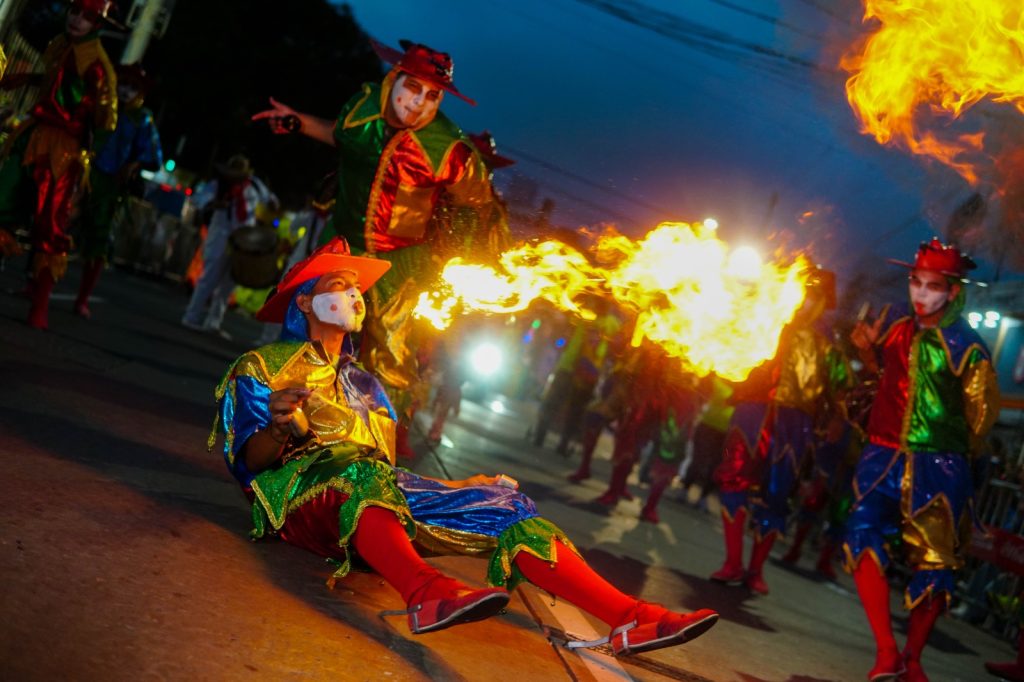
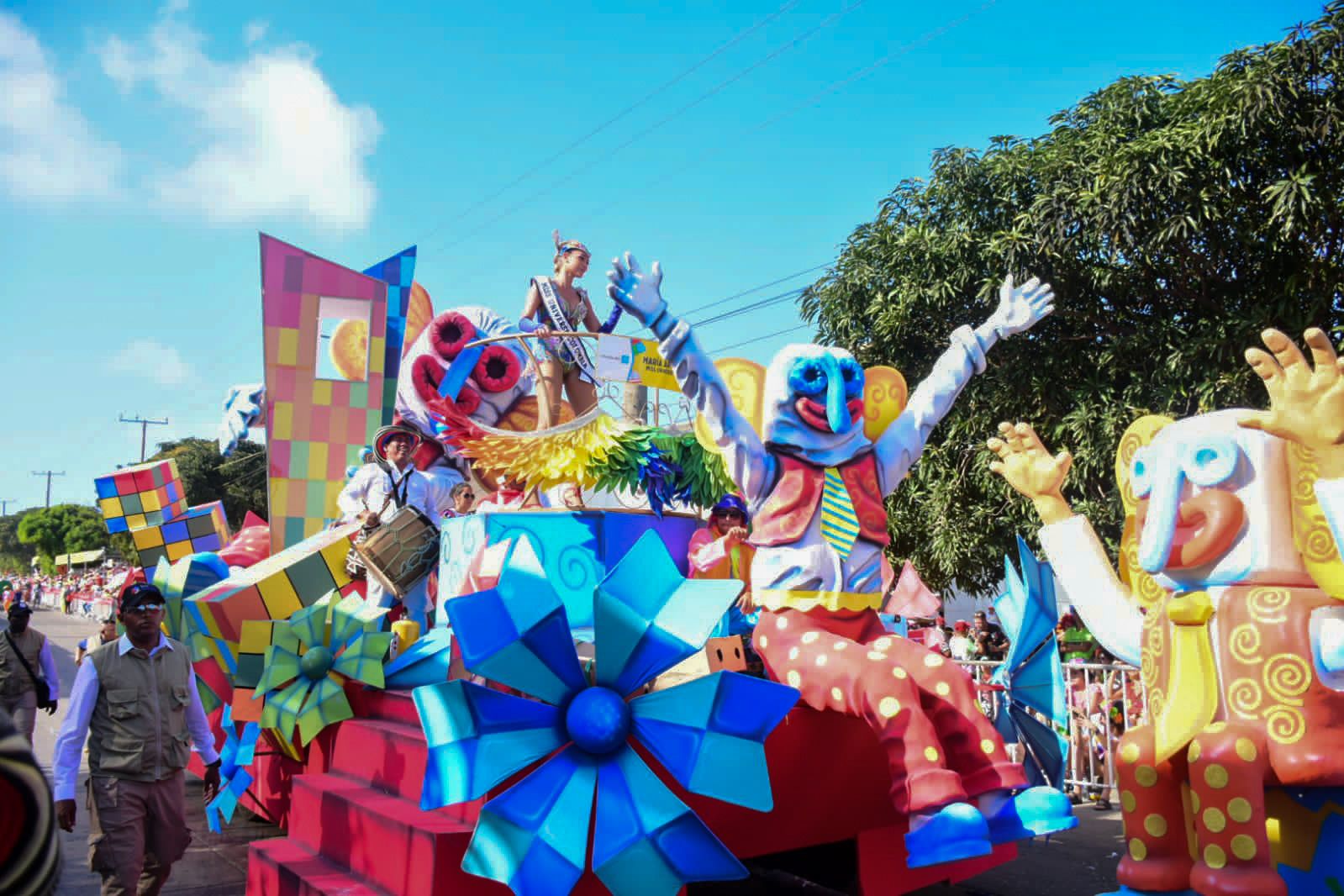
The characters of Barranquilla Carnival — the Marimonda, the Garabato, the Congo, the Monocuco, the Negrita Puloy, King Momo and Joselito — are far more than costumes: each one tells a story of satire, resistance or pure joy that explains why this festival is UNESCO World Heritage. Meet the protagonists and what they mean.
The Marimonda: the mocking king born in Barranquilla
The Marimonda is the only Carnival character born entirely in Barranquilla, which makes it the festival's ultimate symbol. Its mask — a long trunk-like nose, huge elephant ears and bulging eyes — appeared in the late 19th century as the working class mocking the elite: port workers wore their clothes inside out, with old ties and patched jackets, to caricature the wealthy gentlemen who exploited them.
Its trademark is a teasing sound made with a small whistle called the "pea pea," and it lives by a single rule: irreverence. When you see thousands of green, red and yellow marimondas flooding Vía 40, you are watching Barranquilla's soul in its purest form.

The Garabato: the dance of life versus death
The Garabato Dance is one of Carnival's oldest and most philosophical traditions. It stages the eternal struggle between life and death: dancers in red capes and embroidered chest pieces, carrying a wooden staff (the garabato), face Death itself — a skeleton-clad figure with a scythe. The choreography always ends the same way: life wins, because at Carnival joy is non-negotiable.
The Congo: African heritage turned into dance
The Congo is considered the oldest dance of Barranquilla Carnival, with groups like the Congo Grande tracing back more than 150 years. Dancers wear flower-decorated headdresses, wooden machetes and embroidered capes, their movements evoking the African warriors brought to the Caribbean in colonial times. It is the festival's most direct link to its African roots.

The Monocuco: the pleasure of anonymity
With its colorful tunic, hood and mask, the Monocuco has a superpower: nobody knows who is underneath. A colonial-era costume, it allowed "respectable" ladies and gentlemen to enjoy the party unrecognized — flirting, collecting debts or mocking their neighbors with total impunity. It remains the favorite disguise for anyone who wants to live Carnival without explanations.

The Negrita Puloy and the people's characters
The Negrita Puloy, in her unmistakable red dress with white polka dots, went from 1960s advertising image to an absolute icon: today hers is one of the largest and most beloved comparsas of Carnival. Alongside her parade other figures of popular imagination:
- María Moñitos: an impossible hairdo full of colorful bows and flirtatious humor.
- El Descabezado: an optical-illusion costume carrying its own severed "head."
- Joselito's widows: stars of Carnival Tuesday, weeping (between fits of laughter) for the festival's dearly departed.
- El Torito: a wood-and-fabric bull that playfully "charges" the crowd, inherited from colonial bull festivities.
King Momo and the Carnival Queen
Every party needs royalty. The Carnival Queen is the celebration's ambassador: she presides over the Battle of Flowers, leads the Guacherna night parade and gets the whole city dancing. King Momo, her counterpart, is traditionally a carnival-maker from the working-class neighborhoods, chosen for a life devoted to folklore. The 2027 Queen is Salwa Maloof Habib, named by the board of Carnaval S.A.S. on 21 August 2026 under the motto «Carnaval pa' todo el mundo». King Momo 2027 has not been named yet; our Carnival 2027 page will be updated the moment it's official.

Joselito Carnaval: the festival that dies and is reborn
Joselito is the spirit of Carnival made flesh. He is "born" on the Saturday of the Battle of Flowers, parties four days without rest and "dies" on Tuesday, exhausted by the celebration. His burial — with weeping widows, satirical wills and mock funeral processions in every neighborhood — is the ritual that closes Carnival until next year. It isn't sadness: it's the promise that the party always returns.
Where to see the characters at Carnival 2027
All the characters parade during the four central days of Barranquilla Carnival 2027 (February 6–9). The unmissable date is the Grand Parade of Tradition and Folklore (Sunday, February 7): no floats, only heritage dances — Congo, Garabato, Son de Negro and pure cumbia. To watch them up close, check our tickets and palcos guide and the where-to-stay guide to plan the full trip.
| Character | Origin | Best place to see it |
|---|---|---|
| Marimonda | Barranquilla, 19th c. | Battle of Flowers (Sat, Feb 6) |
| Garabato | Colonial tradition | Grand Parade of Tradition (Sun, Feb 7) |
| Congo | African heritage | Grand Parade of Tradition (Sun, Feb 7) |
| Monocuco | Colonial era | Parades and street parties, all Carnival |
| Negrita Puloy | Pop icon, 20th c. | Battle of Flowers & Fantasy Parade |
| Joselito | Barranquilla ritual | Carnival Tuesday (Feb 9), citywide |